- The Origin
- Process
Water: a whole water system (Part 2)
Water: far more than a resource – building a holistic water system (Part 2)
Water is not only essential to life. It is also memory, movement and transformation. On our farm, making the first pond has been much more than a piece of construction: it has been a living process, full of observation, patience and connection with the land.
Water is far more than a resource. It is the invisible thread tying together every part of an ecosystem. On our permaculture path, this pond is a fundamental step towards designing a holistic water system, where every drop does several jobs at once and every decision is aimed at regenerating life.
After carefully reinforcing the inside of the bank with gravel we found on the land itself, one of the most exciting moments arrived: starting to fill it. Far from being something immediate, though, this process asks us to go slowly. For several weeks we watch closely to see how the structure responds, alert to any seepage or weak points that need strengthening. There is no place for haste here.
At the same time, the soil — still bare after all the earth moving — is asking to be covered. We know exposed soil is fragile, so we give it plant life to hold and steady it. We chose species such as vetiver and achira, deep-rooted plants that hold the ground without damaging it. And, as always in nature, we are not alone: native species soon return, claiming their space and weaving the balance back together.
Alongside this, we have begun to watch the native species come back on their own. This is one of the most beautiful principles of permaculture: when the right conditions are created, nature responds with abundance and resilience, restoring the balance by itself.
The art of regulating water in a water system
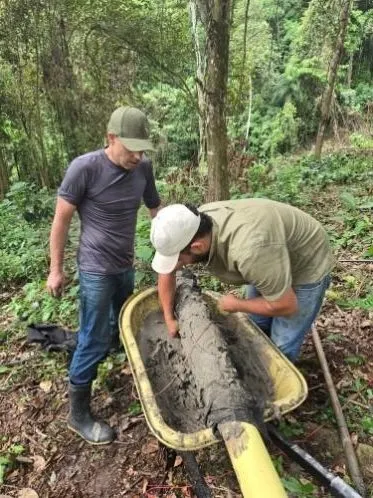
To manage the level of the pond we chose a traditional and rather ingenious solution: a pivoting monk. This structure, simple in appearance, allows us something fundamental: to listen to the water and hold a conversation with it. Thanks to a reinforced outflow pipe and a movable vertical duct, we can regulate the level, let the excess flow away gently, or even empty the pond when necessary. Control without rigidity, technique in the service of balance. It is a simple but powerful solution, and it shows how natural engineering can sit harmoniously in the landscape.
An interconnected system
The pond is fed mainly by spring water, which guarantees a steady flow even in dry periods. Rain matters, but it is not enough in a climate with such marked swings. This is where integrated water management comes in: we understand that infiltration is not a loss but a strategy for keeping the soil hydrated and recharging natural cycles.
The source: living water – an interconnected system
Our pond does not depend on rain alone — far too unpredictable in this climate of extremes — but draws on something more constant and more valuable: spring water. That source not only fills the pond, it also keeps the surrounding soil hydrated through infiltration. And yes, that “lost” water is not a mistake. It is part of the design. It is life spreading out beneath the surface. This is where integrated water management comes in: we understand that infiltration is not a loss but a strategy for keeping the soil hydrated and recharging natural cycles.
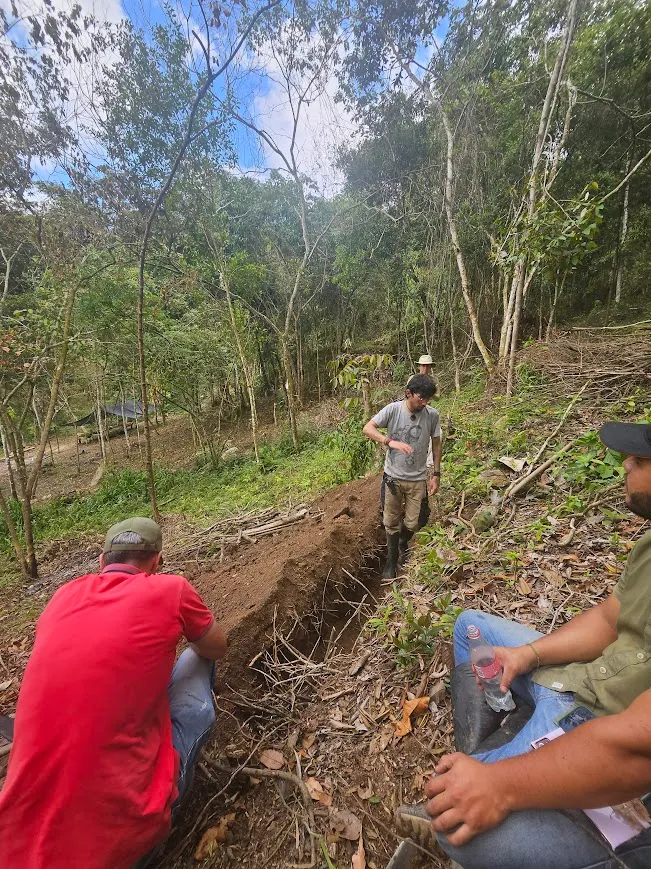
We decided to make that flow visible. We reused old roof tiles to create small open channels guiding the water down from the upper ponds. Thanks to the natural slope of the land, the water finds its way effortlessly, connecting the three ponds and irrigating everything it touches along the way. So every drop does several jobs at once.
When abundance is a challenge too
If we have learned one thing, it is that water does not only run short. It can also overflow. In this region, a single night of rain can drop 12,500 litres of water into the pond. A force that is hard to picture.
And it does not come alone. On top of that there is the water running down from the higher parts of the land, which can easily quadruple that amount within hours. The water level would rise 20 to 30 cm in a single night. This is where planning becomes essential: we need an overflow system able to release that excess without putting the structure at risk.
Nature guides us in this too, though. Only when the water level rises far enough will we be able to pinpoint the best place for that overflow. Because building with nature also means knowing how to wait.
In the next part we will share how we solve this challenge, and what we have learned along the way…
Alexander F. Eckmann
Co-founder
Photos from the process
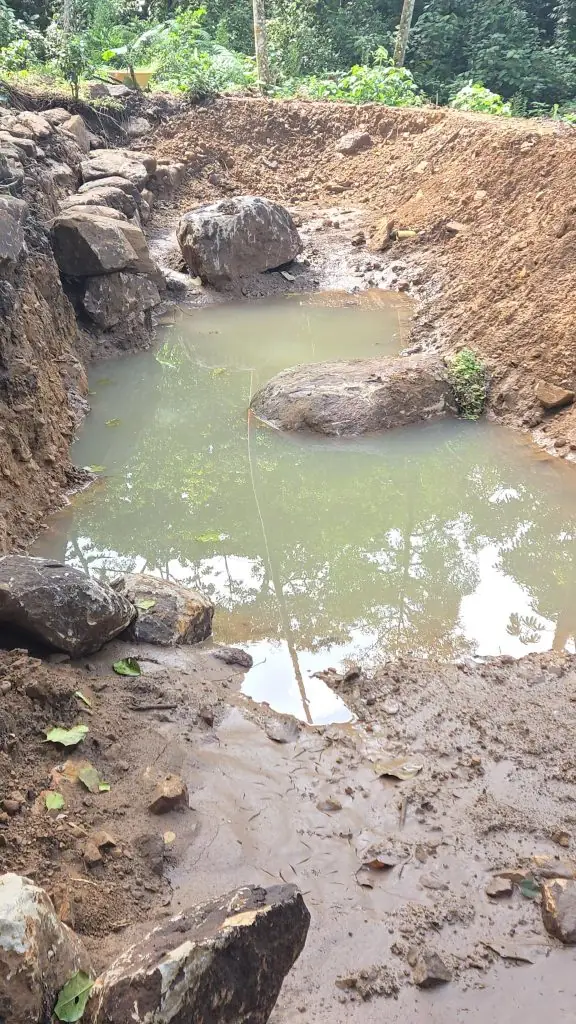
The lake is filling up 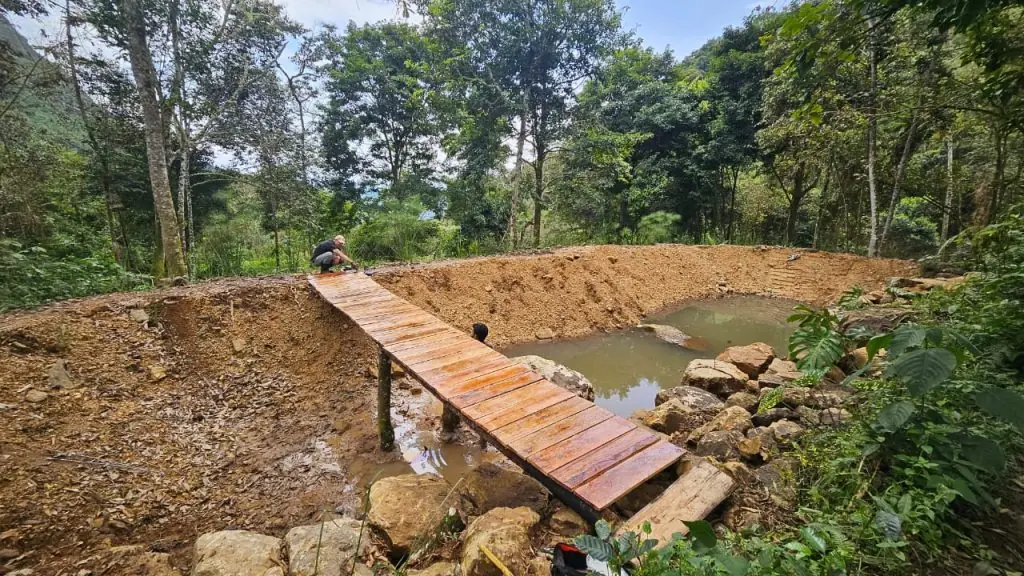
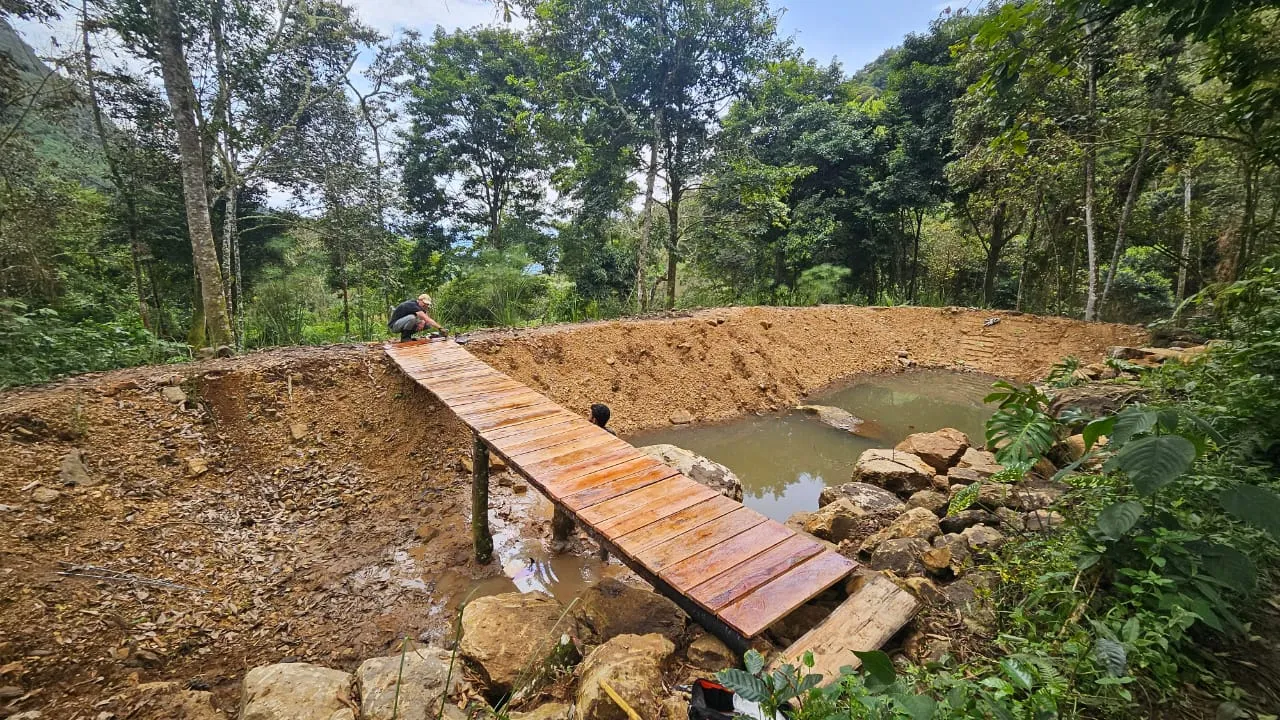
Our first bridge is finished 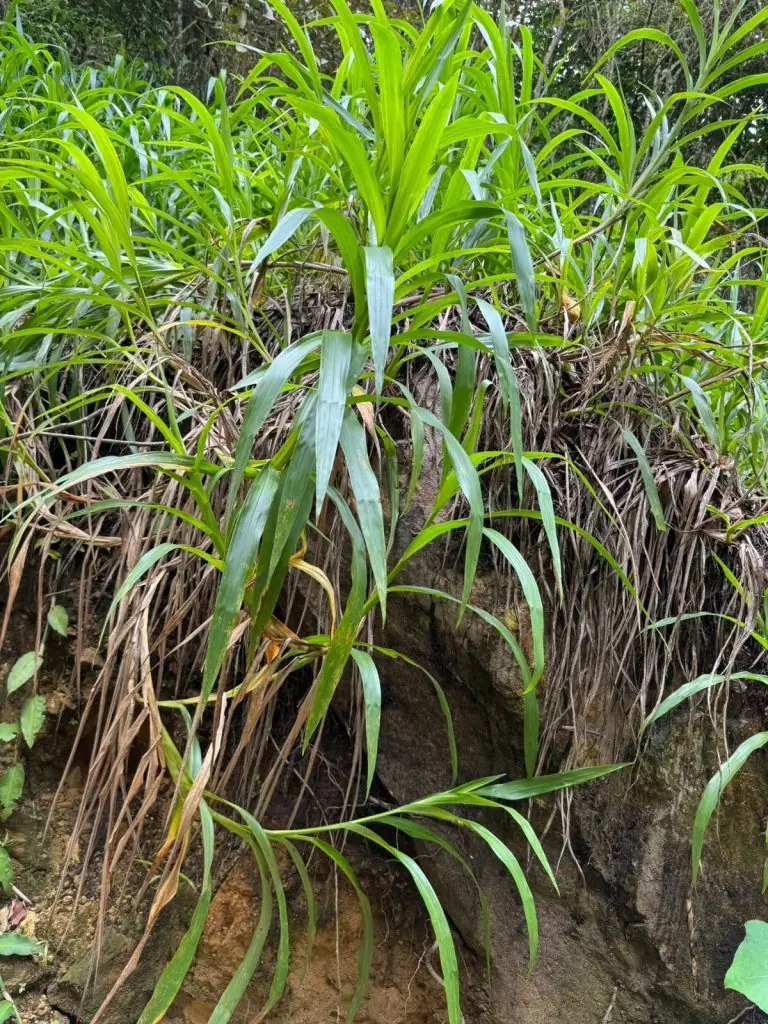
Planting beside the lake, such as napier grass 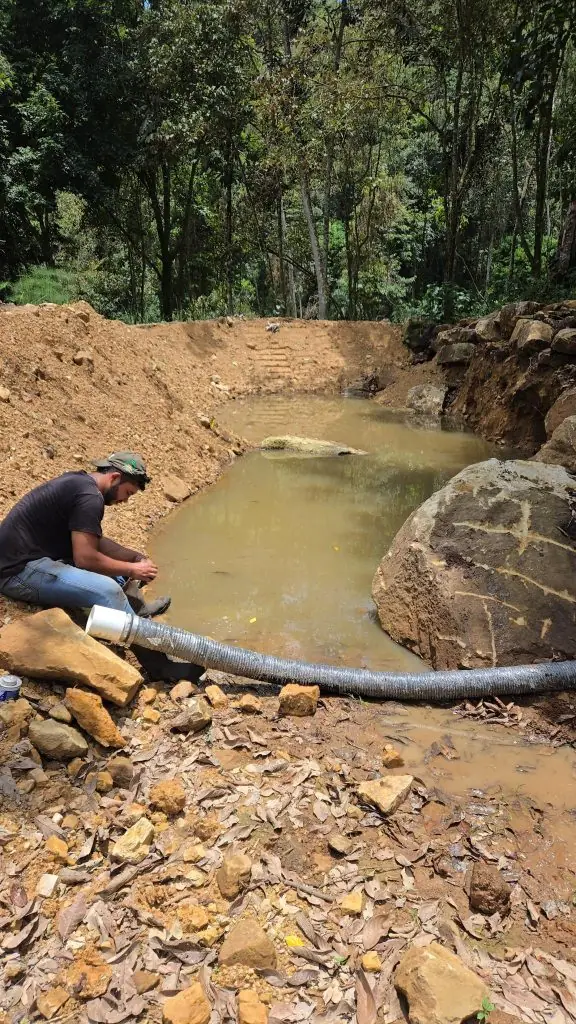
Building the monk, the overflow pipe 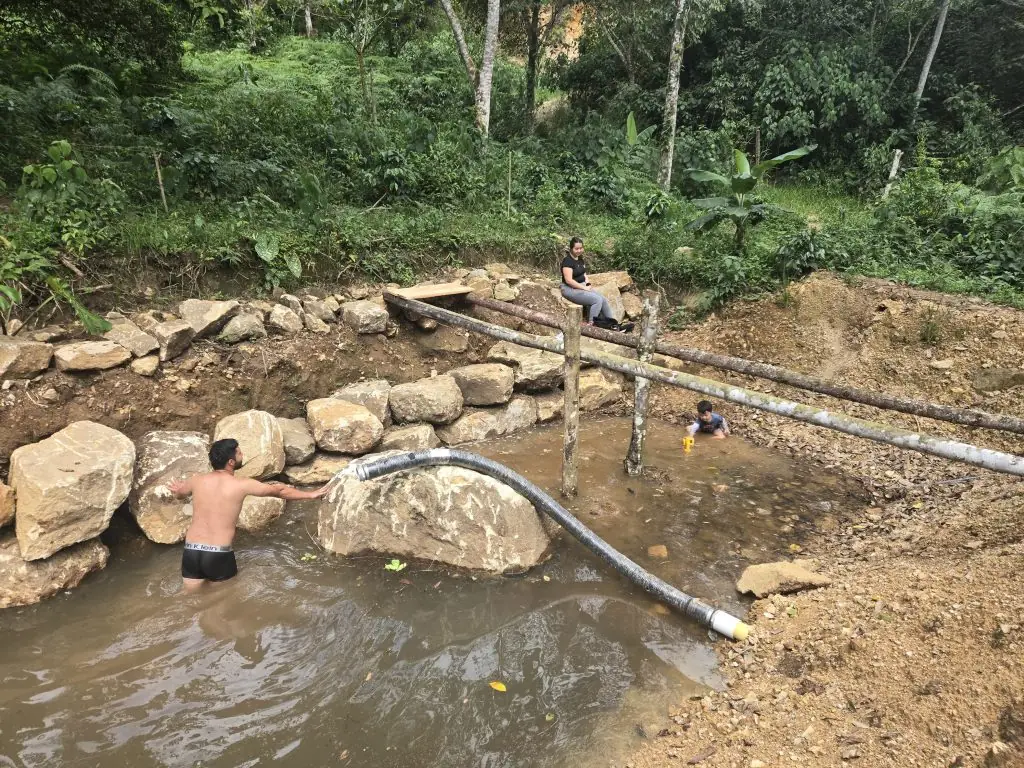
A water system is the closed circuit that moves water around the planet. It works like a perfect machine, driven by the sun and by gravity.