- The Origin
Water, more than something to drink: building our first pond!
We drink water every day and barely give it a thought. For many people in industrialised countries, clean drinking water is simply taken for granted. But did you know that 2.2 billion people have no access to safe drinking water, and 4 billion lack adequate sanitation? Did you know that drinking water in the industrialised countries of Europe and North America is also heavily contaminated, by medicines and by industrial agriculture with its pesticides, fertilisers and other chemicals, and that it has to go through an ever more expensive treatment process before it reaches the tap? Clean water is becoming a scarce commodity the world over. In Colombia, even treated drinking water cannot always be drunk straight from the tap. People buy water in plastic bottles, which then end up in landfill. All of this gave us pause. When we arrived at our farm, it was essential for us to find our own uncontaminated springs there. The water comes straight out of the mountain rock and is pure and safe to drink. One problem is that in the rainy season there is water in abundance, while in the dry season it can run short. So what were we to do? We developed a system of ponds, of the kind we had seen from the great Austrian permaculture and water expert Sepp Holzer.
There are several reasons why ponds matter:
– Securing irrigation for the plants
– Having reserves for the dry season
– Protection against forest fires
– Habitat for animals, plants and insects
– Water seeps underground and helps keep the soil moist.
What did we want to avoid? Many pond builders are afraid the water will escape and disappear. So they build artificial ponds with waterproof liners. But that is a serious mistake. Not only because plastic is involved, but because it achieves the opposite. Ponds should not hold water statically: the water should seep slowly into the ground and supply it little by little. This is only possible, of course, if a constant inflow is guaranteed. To stop the water draining away too quickly, several preparations are needed. The subsoil has to have a thick enough layer of clay and silt to slow the water down. And where the water runs off, a bank has to be built so that no more water leaves than comes in. An adventure and an experiment, since none of us has ever built a pond this size. This pilot project will shape the ones that follow. A pond and a biotope for plants, and irrigation at the same time. And perhaps somewhere to cool off on hot days!
“Gravity irrigation” means a system where water is carried from a raised store — a reservoir, say — to the fields through channels or pipes, using the natural slope, with no need for pumps.
Our first lake, quite a challenge – this week’s tasks:
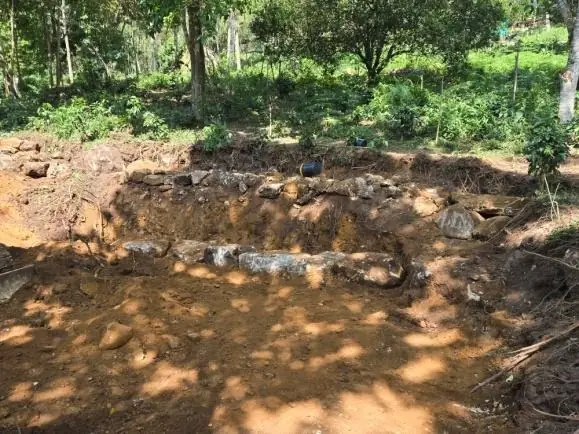
First, the one-metre layer of topsoil has to be removed.
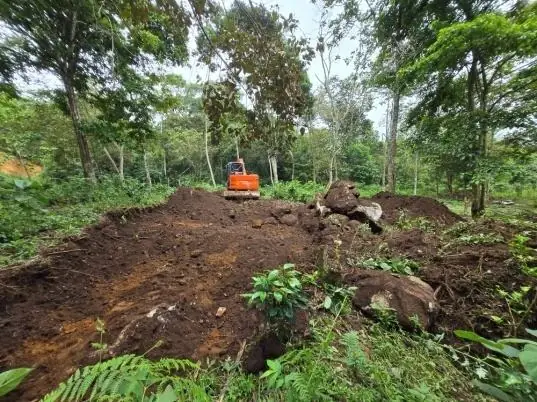
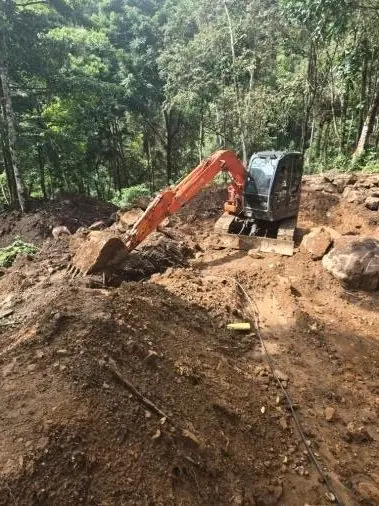
With the next layer, the clay, we build the bank that slows the water that wants to run off.
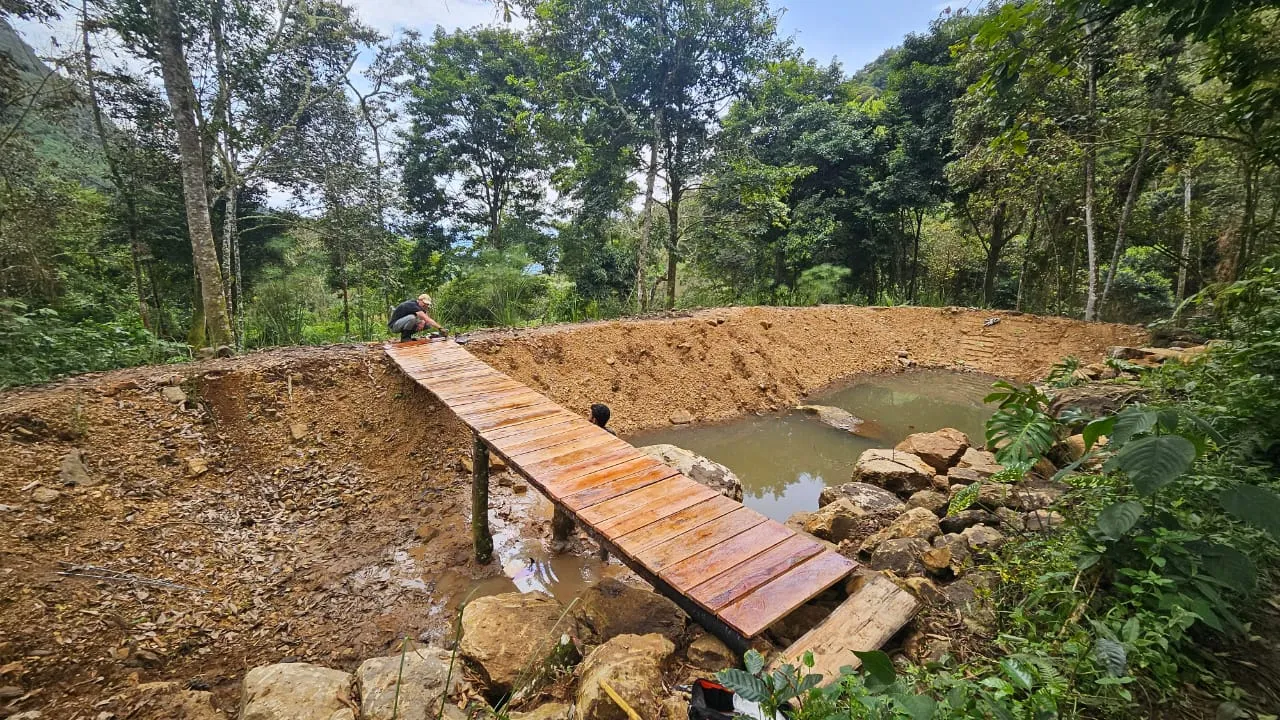
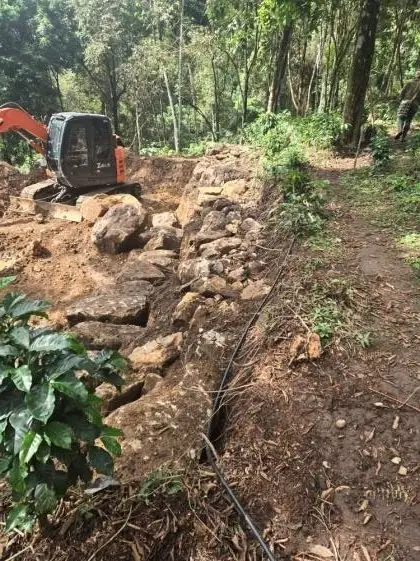
The stones we found stabilise the shore.
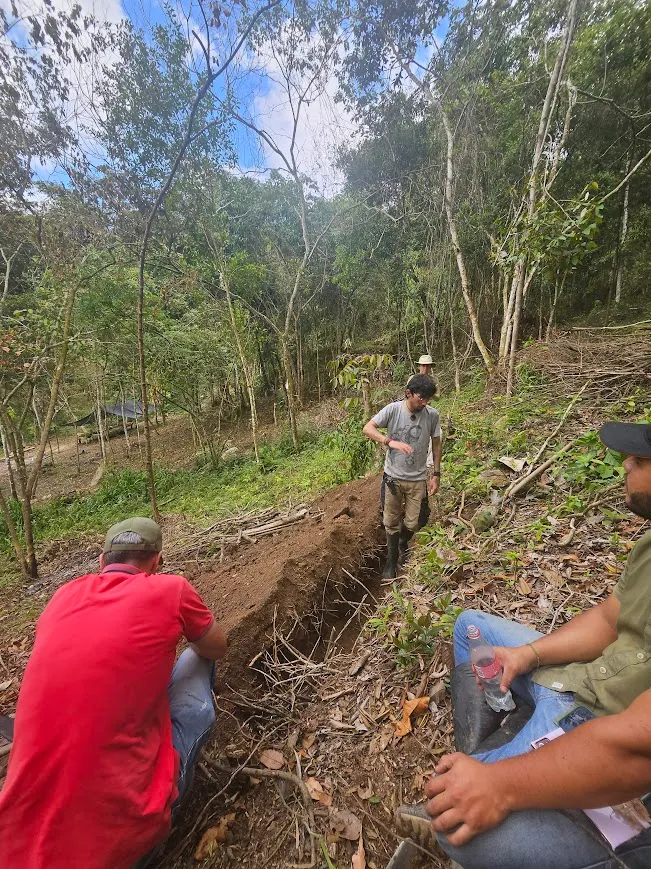
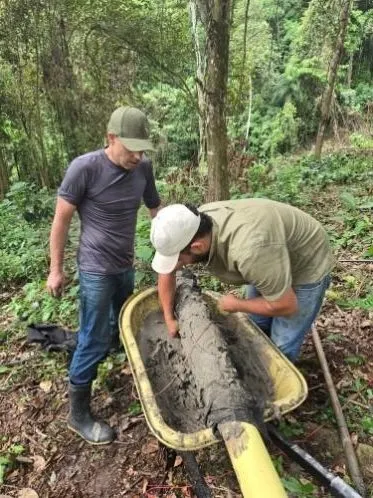
The outflow pipe is prepared and laid into the bank.
So far the lake is 2.5 m deep. In part two I will report on the next steps. We are all eager to know whether we will manage to finish the pond next week.